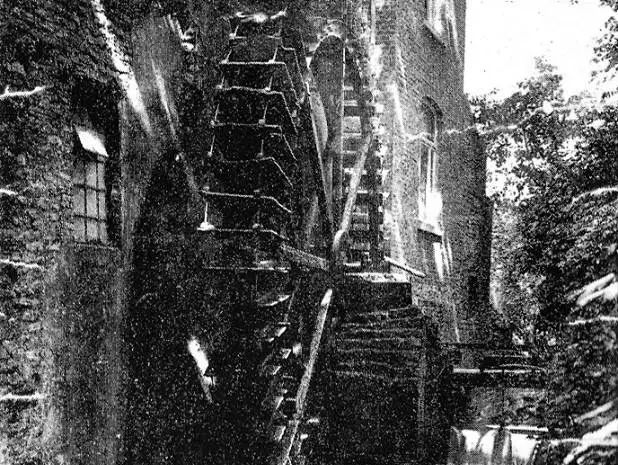
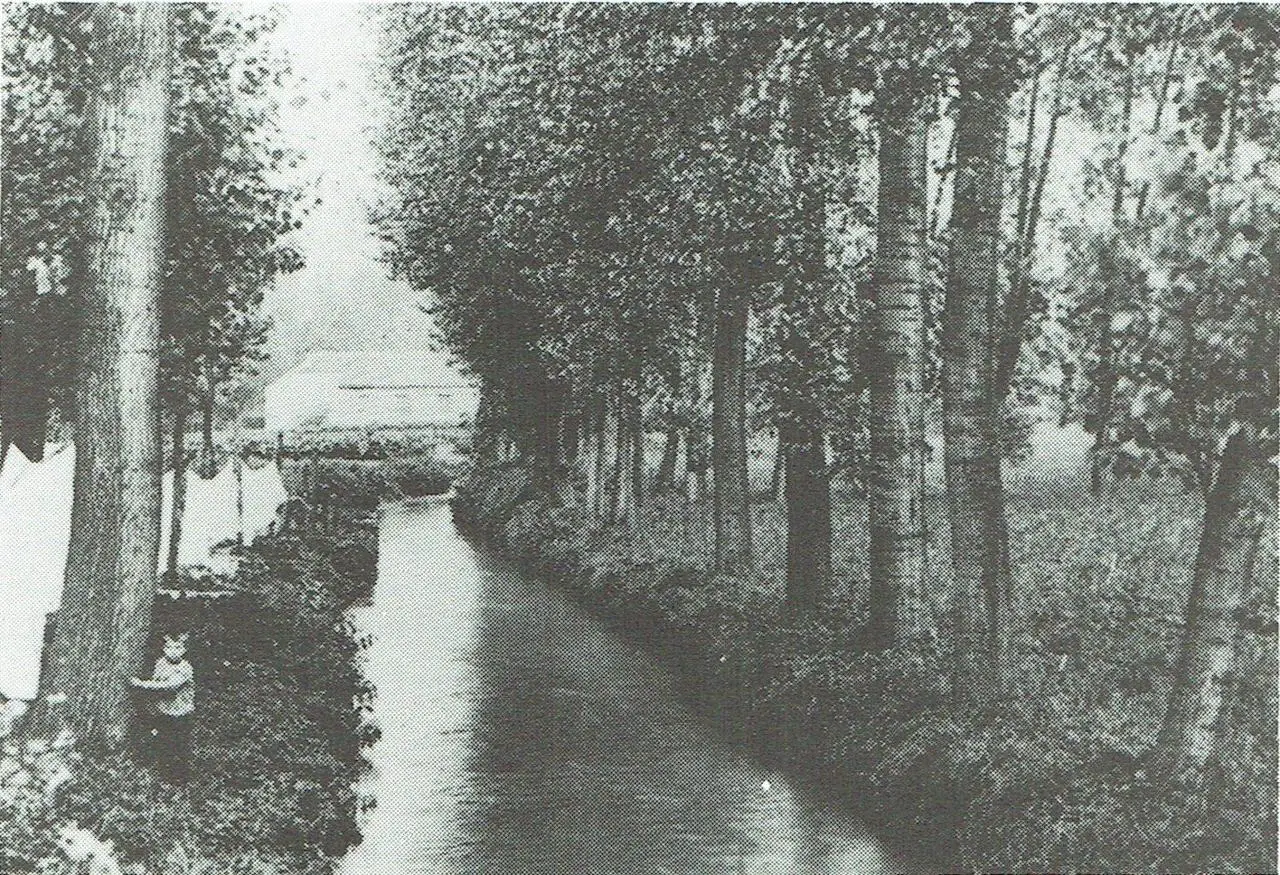
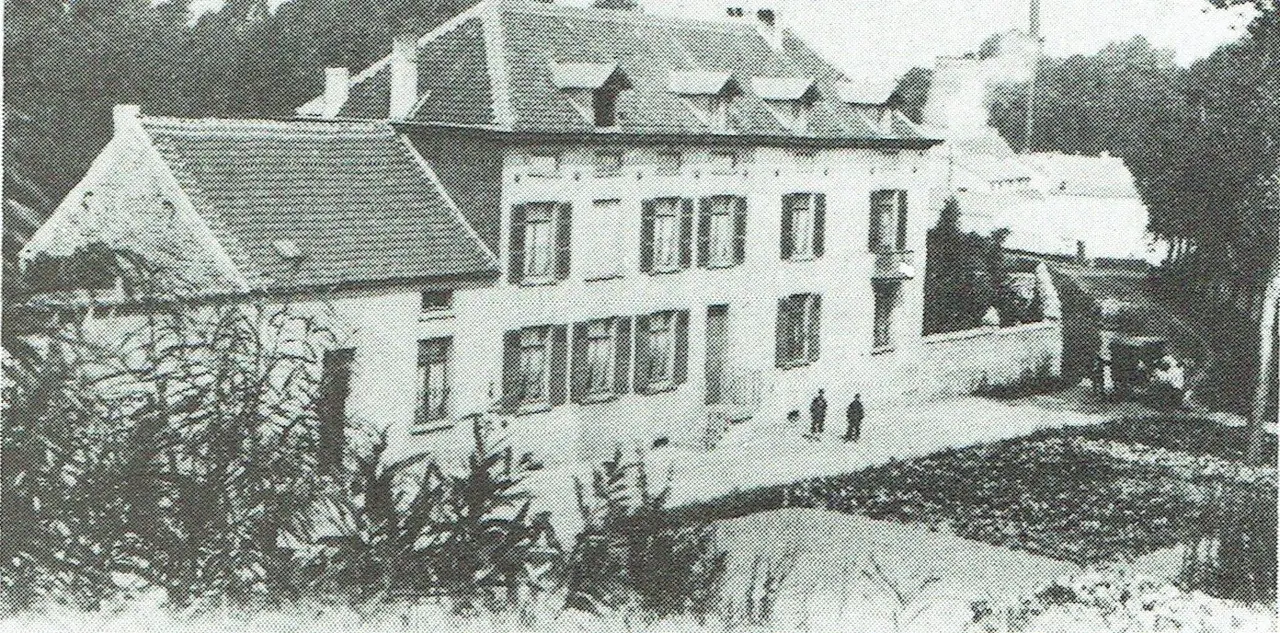
Over the centuries some sixteen mills stood along the Woluwe and the Holbeek in Diegem over the centuries, though never all at once. They ground grain, pressed oil or made paper and, in the 16th–17th centuries, gunpowder too. In 1686 there were 2 grain mills, 4 paper mills and 1 oil mill. In 1844 there were still 6 water mills (2 oil, 3 grain and 1 paper mill) and 2 windmills.
The oldest mills belonged to the duke, the lords of Diegem and the abbey of Kornelimünster. In 1285 Duke John I took over a mill that became the compulsory (ban) mill for Diegem, Haren, Machelen and Melsbroek (the ’s Hertogenmolen). Between 1563 and 1568 the millers of Diegem and Vilvoorde fought a ‘mill war’ over the water of the Woluwe.
Sixteen mills
Counting every mill that ever turned in Diegem, from the border with Zaventem to that with Machelen, gives sixteen: the Kleine Hofmolen (later St.-Katarinamolen), the Duivenmolen or Olekens mill, the Jacobs mill, the ten Bossche mill, the Bauwens water mill and windmill, the Broek- or Brachmolen, the Vondelmolen, the Cleyne Molen, the Hofmolen or Grooten Molen, the Wedelgem mill, the Poeselmolen, Van Ertynghen's Nieuwe Molen, the ducal mills, the Abbey mill and a windmill on the Hoorenveld.
Three of them were called manor mills because they belonged to the lords of Diegem: the little mill of Nijpezele, the Cleyne Molen near the castle and the Hofmolen at the Voorde. The water mills were leased out again every three years, so the same millers often worked at different mills. In the 17th century Brussels entrepreneurs turned grain and oil mills into gunpowder mills, because the wars demanded a lot of powder.