Church of Our Lady of the Seven Sorrows
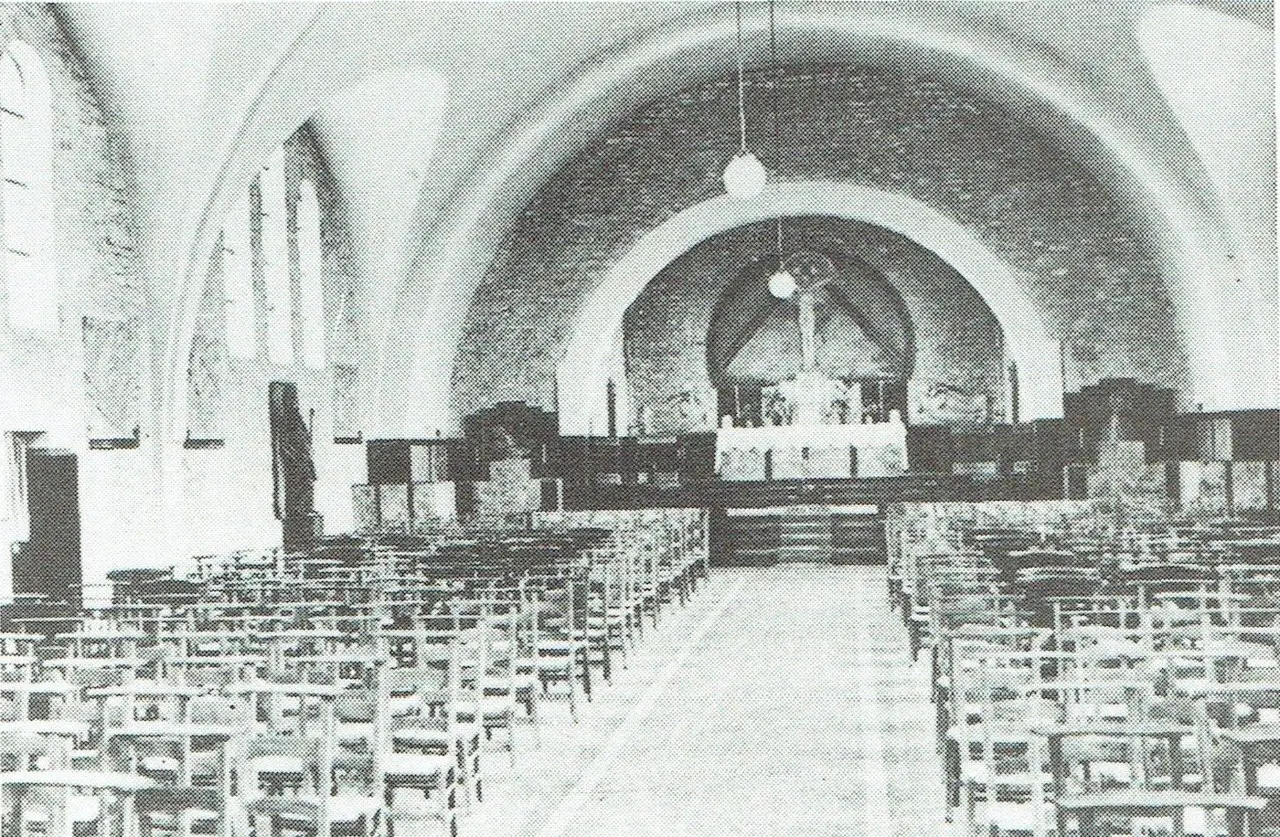
The modern church of Diegem-Lo was built from 1928 to 1929. The Romanesque style was taken as its basis. Modern techniques made it possible to do without any pillars. The church is built of sandstone from Diegem. A large quantity of the sandstone comes from the wall that once enclosed the estate of Beaulieu Castle. The church houses a fine organ with bellows, which was listed as a protected monument by Royal Decree in 1979.
The Saventerlo
The Lobos or Saventerlo was one of the five great reserved hunting grounds of the duchy of Brabant (about 500 bunders). Emperor Charles V had it marked out with 150 bluestone posts bearing a Burgundian cross. During the First World War the Germans dug the posts up; mayor Van der Aa had four of them placed in front of the Diegem town hall, where they still stood in 1980.
After the First World War the Lo became known for its witloof (chicory). In 1938 the Belgian army began building an airfield here; it grew into Zaventem airport. In 1927, 1,140 of Diegem’s 3,884 inhabitants lived on the Lo.
A parish of its own
By royal decree of 24 August 1926 the parish of Our Lady of Seven Sorrows was founded, with Egidius (J.E.) Davidts as its first priest. From Christmas 1926 to September 1929 Mass was said in a temporary chapel in the workshops of the Van Crombrugge family. The new church, to plans by architect Juliaan De Ridder, was blessed on 15 September 1929 and consecrated by Cardinal Van Roey on 3 August 1936. The sculptures and Stations of the Cross are by the sculptor Paul Stoffyn.
The church was built of white stone from old buildings then being demolished, including the castle of the Marquis d’Assche at Haren and the boundary wall of Beaulieu castle, supplemented by stone bought from Jan De Kempeneer. In 1943 the tower had to be lowered on German orders because of Melsbroek airfield, and two bells were requisitioned; they never returned.
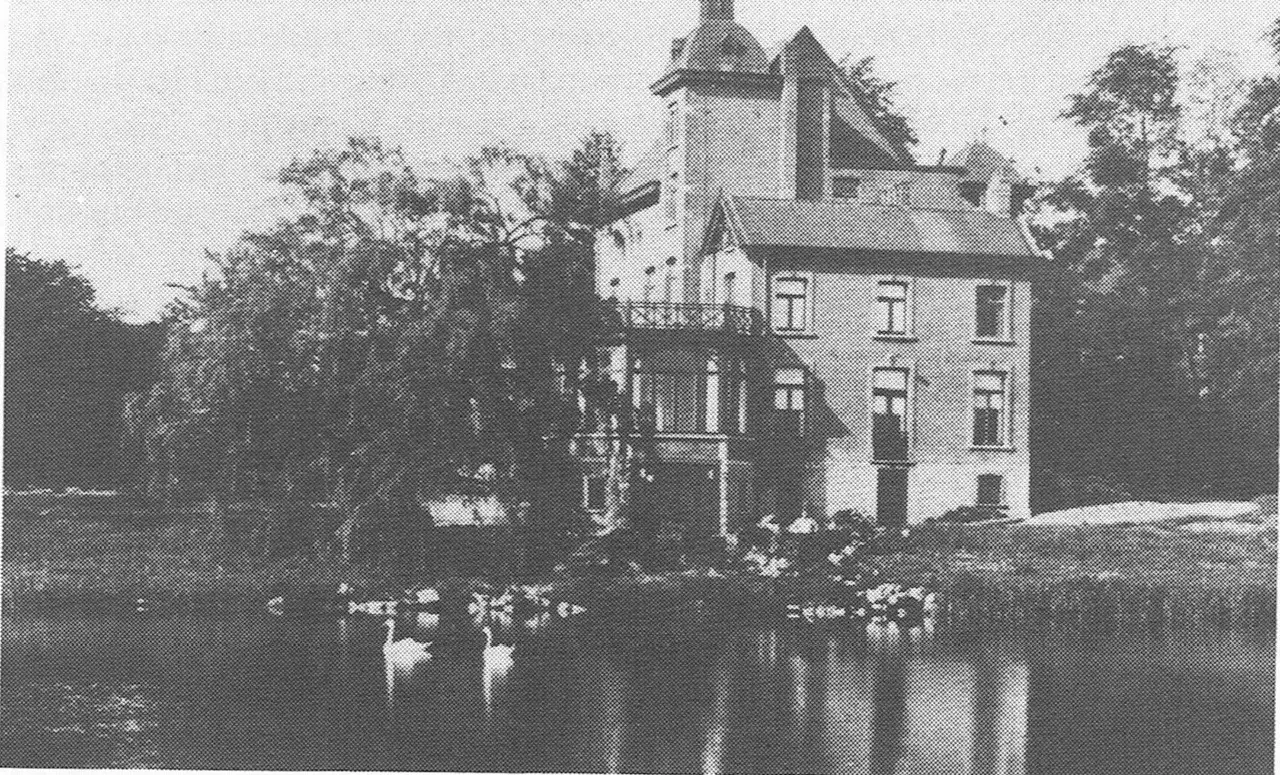
The villa ‘Les Lierres’, on the corner of the Zaventemsesteenweg and the Sint-Katarinastraat, was turned around 1903 into an Art Nouveau ensemble with a park and a large pond. Its last occupant made it into the Alpiflora ornamental-plant nursery. Everything disappeared in 1972 for the enlargement of the motorway interchange.